
We’re going to do something a little different today and go the podcast route with a look at the poem “Ghost” from last October. Actually, one generation removed from the poem, because the hosts of the discussion are reading from the lyrics of a bluegrass song by Kat’s Sundog based on the poem. The lyrics follow below.
The discussion itself was generated with a Google Notebooks tool, but objections to AI aside, one thing about these tools is clear: chatbots struggle to write a decent poem, but their analysis of poetry is extraordinarily good and sometimes provocative. At the very least, they provide a starting point for further insight.
Here are the song’s lyrics:
Ghost
(A traditional bluegrass song by the band Kat’s Sundog)
[Intro, instrumental, slow-paced banjo & fiddle picking, melancholy mandolin, building to a full band entry before settling into verse tempo]
[Verse 1]
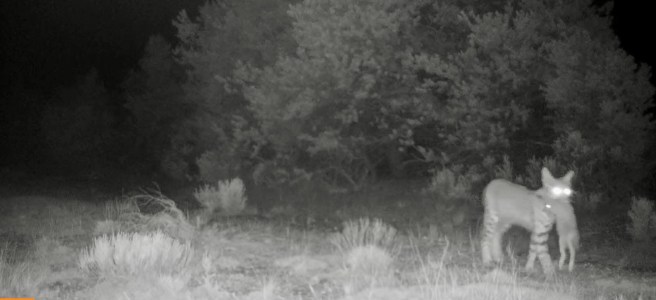
A trail cam tied to an old pine limb
In the cool, thin mountain air
Caught a shadow movin’ through the gray
Of a cold September day
A bobcat, slow n’ easy on her paws
A rabbit swinging from her jaws
Eight forty-eight in the autumn pines
Though the dead ain’t counting time
[Pre-Chorus]
And the picture frames what the heart can’t keep
The sigh of a soul released
We freeze the moment to save the spark
Before it fades into the dark
[Chorus]
Yeah, we’re keepin’ your ghost here
Though you’re long gone
Clingin’ to the shade you left
Of what’s left here
Holding our breath like a hollow
Can’t lay you down, can’t follow
[Verse 2]
That mountain cottontail swaying
The hunter on her pendulum way
Through the greasewood and the brush
Beast too beautiful to touch
Stripes on her haunches in the dimming light
Autumn moon makin’ her bright eyes wild
Slides through the branches like a work of art
Stealing what’s still breathing from my beating heart
[Bridge]
Oh, little one, you’re wantin’ to go
Where the wild things run and the cold winds blow
But babe, give us back his form
We’re holdin’ on, we’re holdin’ on
[Instrumental break, fiddle solo over driving banjo]
[Chorus]
Yeah, we’re keepin’ your ghost here
Though you’re long gone
Clingin’ to the shade you left
Of what’s left here
Holding our breath like a hollow
Can’t lay you down, can’t follow
[Outro]
Well, she’s carrying the host here
We’d love back to livin’
Bringin’ back the heartache we bin given
[Fading mandolin]
And if you want to listen to the song, it’s here: https://suno.com/s/bB7Qh9uHaXeMOFjg
 Too bleak and beautiful