
What He Said to Her

The earthquake of ’89:
those fifteen seconds in San Francisco.
An apartment collapsed
on a couple in the Marina.

They pulled him out
but she was pinned.
The glass was cutting her,
the fire was too close.

The firemen pulled him out,
but
that terrible lacuna,
the moment they knew it was too late,
how he climbed back in,
briefly spoke.
What he said to her.

I have come to think
something stopped then,
the world having
exhausted its cruelty.

Hoisted up again, he crawled
from the drywall,
the splintered wood,
cabinets she could never stand.

He grabbed a hand,
found an living sleeve;
in the park,
a long animal silence.

I fill the kettle.
It clanks against the ring.
I miss this remembered life,
where no-one wakes in fire.

Deer on the Deck

I was having coffee outside on the second floor,
remembering how the handyman had said
when you have a wooden deck in Colorado
you’ll be replacing that two by six fir
every couple years — they get
so twisted by the summer sun.

And because he was right,
when the doe walked out on the deck below,
between inch-wide cracks,
I could make out every hair of her forehead,
cocked and furrowed like she felt
something slightly odd
but seeing nothing, shifted, cleaned,
each pegleg step sounding up
as though through the boards of a ship.

She was pregnant
and the wood below was cool
so I watched her for close to half an hour
with a swelling sense — not of love exactly
but unfathomable care
racing out like water dropped from a height
in every direction above her head.

And it occurred to me
that this must be how gods are created:
the creature below, unsettled,
with its secrets,
with its exquisite womb,
and the accidental hunter above,
in agony, close enough to touch,
too far to know.

December, Taking Out the Compost

I walk our kitchen scraps to the compost pile:
ragged red-leaf lettuce, long English cucumbers
forgotten at the back of the fridge
moist, soft as sponge.

The flu is going around.
I had congratulated myself that I escaped it,
that others were more mortal,
but it has hit me hard.
I glower: neanderthal, punished
and miss a step on the deer trail,
slipping on the rock.

It strikes me that this vegetable box full of earth
tucked away behind the woodshop
(overflowing now — too cold and too dry to decompose)
is the most important thing I own:
a memento mori masquerading as gardening.

There will be a time
when my body, too, will stop working,
when it will break down,
become a part of the cottonwood,
animate the catnip and the chokecherry
feed the mule deer in spring
take its place on the Hogback —
dissolve.

On the compost pile /
like my own hands
the cucumbers are familiar and strange.
Temporary.

I grab the haying fork,
mix them in,
and forget again.

Strange Birds

In the summer we sat out by the reservoir
and watched the water shrink.
The city sent us notices
about leafy spurge and spotted knapweed.

Sometimes we mowed lawn,
picked apples, Elberta peaches;
canned some, saw the rest rot,
the grass to our knees, the driveway clear.

Hummingbirds stopped by —
and jays, cowbirds, and robins —
so many even I, fifty years, tired of them,

remembered the old Indian
who taught me to bury birds
so I could dig them up
stripped of feather and skin
and learn their bones.

But not a word about the season

how when the cold came
they had all moved on,
and now, just the prints
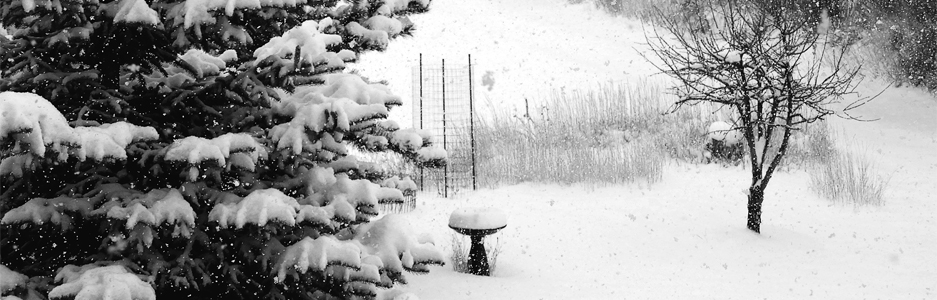
of deer and foxes in the snow.

So starting out this morning
I disturbed you shaking in a branch
and only heard the sound that you made leaving.
Something I had never heard before:

a cry the snow the pines.